- Primo
- Resources for Research
- Services
- About Us
- Ask a Librarian
- Help & instruction
- Connect from Home
- Site Index
- Library Home



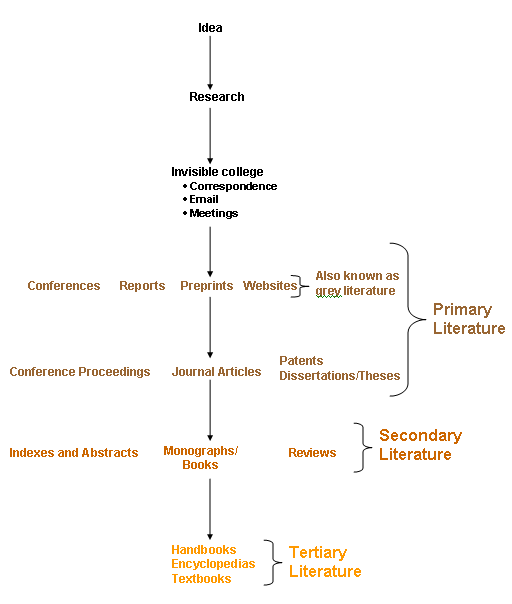
As the diagram indicates:
Librarians often refer to this latter sort of publication as grey literature, indicating that it is shadow-like in the sense that it is more difficult to find libraries who have this form of publication than the forms of publication that we see below on the diagram.
Note that monographs (also called books) straddle the last two stages. This is because some monographs or books point only to well accepted scientific research, and other monographs point also to scientific research that is still being evaluated.
Originally created by Jim Parrott.
Adapted by Jackie Stapleton, 2007.